The Spirituality of Addiction: Work and Food Addiction

Dynamics of Addiction to Work and Food

Part 1 of a Series on the Spirituality of Addiction

*These are my thoughts, my opinions and many of these come from personal experience with addiction, you might not agree with everything written, and that is okay. I may even be harsh when talking about addiction. That comes from seeing it destroy the lives of those close to me, and even coming close to surrendering parts of myself in dealing with my own addictions. All insights, comments, and sharing is welcomed. It is through discussion that we grow.– Mike”

When you hear or read the word “addict” What is the first image or thought that pops into your mind? Is it of a junkie sitting in an alley shooting up heroin? Is it of an alcoholic unable to control their drinking. Addiction is much more that these images, but these are the images that are most often given to us by media. These images are more extreme versions of what addiction really is. Addiction is the surrender of power to an external source. Many of us move through life without ever really knowing where we are surrendering our sense of control. Loss of power can come through a variety of forms and channels. Drug and alcohol abuse is just one facet of control loss. These can be the most

deadly, so they get more attention as it is important to move the person afflicted with addiction beyond that control sooner than later. For the purpose of this blog I want to focus on two other areas that I have had personal experience with: overwork and food. Within any area of addiction there are also emotions that we also become addicted to. We begin to lock ourselves into dangerous patters that do not let us fully live in our experience.

Overworking ourselves to death is not something you will hear played up in any media outlet, and you wont be seeing it anytime soon on A&E’s show “Intervention”, but many of us will take on more than we can chew, and this can in fact have un healthy repercussions in our lives. Stress is a big killer. Stress can cause high blood pressure, stroke, and in leads into a variety of other unhealthy habits (including other addictions). A lot of people consider certain drugs to be gateways into addictive experiences, but our lifestyle choices can also play a big part in this. After a long day at work, many will head out to
“happy hour” to unwind with friends and a drink (or many drinks depending on the severity of the work week). These are just quick ways to alleviate stress, and at times there is a sense of “peer pressure” to attend functions if they are work related–“I had to go, everyone else in the department was going”. Even the word “happy hour” carries with it a particular weight, it becomes an affirmation as to what is expected from the experience of drinking cheap drinks as a stress relief.

We can become addicted to emotions, sensations and overworking is a way of filling a void that might be present. It allows us to ignore other things that might be going on in our lives. We begin to reach out for substances that will fill the void, or give us cause to turn away from what is most needed. We can even create “victim dynamics” which allow us to use our addiction to justify situations. “The reason s/he left me was because they do not understand or appreciate the work that I do, or the hours that I have to put in, etc.” These kinds of statements deflect personal responsibility for connecting into a place of growth within the relationship or other things that are avoided/ignored/or put off because work becomes that “thing” that fills every corner of our lives. We have to balance our lives fully and create positive outlets of connection to the world around us. Our lives are not just defined by work or community achievements, they are defined by how we treat those closest to us. We have to allow others into this space, we have to create the balance that will allow for interpersonal growth. We have to look around us and see where we need
to show up in our lives fully beyond work. If you are overworking or using work to avoid situations in your personal life, you have to ask yourself the underlying reasons for this deflection? Is there fear in stepping into your life fully? Is there fear in connecting fully to a loved one? Are you more comfortable as a victim than a participant? Asking these questions through a meditation might give you some guidance on what/who and why you
may be playing into avoidance.

Food addiction is another area that gets a little more focus than work addiction, but it can be even more deadly as it has direct impact on our physical bodies. Most people assume that illness such as cancer, heart disease, diabetes are primarily genetic. These illnesses have a greater chance of forming due to our dietary choices, so it is our eating habits that tend to be passed down from generation to generation. As we grow up we build a relationship with food, and there are extremes within that dynamic. Some of us learn to reach out to food to fill a void, others learn to restrict food choices as a place to regain control. Food can bring pleasure and pain, health or sickness, well-being or distress. We have to begin to define our relationship to food in a healthier vibration. When we are reaching out to fill a void we eat more than we need to. In turn we attract guilt, resentment, and the underlying thing creating the void remains present. It doesn’t just disappear because we decided to eat the entire bag of chips. Certain foods can also excite addictions within us. Sugar, caffeine, chocolate, fats all have properties that can affect certain areas of the brain that are also associated with other chemical dependency. I wont discuss all of the dynamics in this post. Think about this, have you ever said “I can’t live without… cheese, chocolate, cupcakes, etc…” that is an affirmation of an addiction. Many will
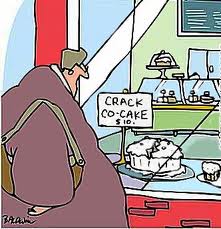
argue that this is said jokingly, but others will agree that if they are forced to give up their morning coffee they would suffer throughout the day. We create an energetic dynamic and connection to the things we put into our bodies. We have to take accountability for our health. When we eat because someone made us angry/upset/sad we are giving power over to someone who is more than likely NOT spending and equal amount of time in the same space. Not only are you giving away personal power you are reaching causing self harm by
filling that emotion with food. I am not saying that having a cupcake or a candy bar is bad, it is what we attach to that food item that becomes the crutch of the addiction. Cupcakes take on the role as saviour vs a delicious treat to enjoy after dinner or on special occasions. This is also giving away power, we become a victim, and many give up. Food addiction requires us to wake up to different choices that allow us to build a positive connection to ourselves and what we attach to food.  Affirmations are powerful ways to grow out of a food addiction. Reaching out for healthier choices, allow ourselves the occasional treat and overall taking care of the body gives us greater sense of connection to the physical self. This brings the spiritual and physical self into greater alignment.
I’ll be going into this deeper in future posts, and I don’t want to make it sound like it is as easy as saying one affirmation to change the food relationship dynamic. It takes a while to go into an addiction and it will take time to step out of one.

Each day we are given opportunities to grow, to be part of this experience and to live this life fully. Understanding where you are allows you the freedom to grow, and it give you the tools to detach from into greater states of being. Take a look at where you currently are and breathe your life in.

Mahayogi Das CFT CSN MAT PAT
http://www.michaelbrazell.com
michael@michaelbrazell.com

Tuesday Spiritual Fitness and Nutrition Tip 2/7/2012

Finding time to integrate fitness in our day can be a challenge.  Here are a few tips to get the process going!


Fitness:  Consistency is important when it comes to integrating a fitness plan into action.  Try and workout at the same time every day.  Once you get yourself on a solid routine it will be easier for you to maintain it, and it will be also be something you can look forward to doing.  Early morning workouts can be a great way to start the day, and evening workouts can be a great way to release stress from a hectic day.  Choose a time that works best for you, and commit to sticking with it for a week.  It might mean that you have to get up a little earlier, or cut out a happy hour here or there, but you’ll be glad you did!


Nutrition:  Eating with consistency can also help us bring our metabolism into greater alignment.   First be sure that you are drinking plenty of water throughout the day.  This will keep toxins flushed out of the body, and it helps to keep you balanced.  If you work out in the mornings you first meal should be no later than 30 min after the workout.  The day should then be divided into 6-8 smaller meals and snack throughout the day.  This keeps your metabolism constantly fueled.  Too often we eat snacks or drink juices that are high in sugar.  This causes your insulin to spike making you feel more hungry.  Having a consistent diet also gives you something to look forward to every couple of hours.  You’ll be less likely to binge at the sushi bar, or eat an extra dessert.  If you are someone that has trouble breaking free from your computer you might need to buy a countdown timer to remind you that it’s time to fuel up the body.   Write out your diet plan, journal it, and keep with it.  There are also a lot of great apps that you can download to your phone for easy tracking of calories, foods, and exercise.

If you have any questions, want to see tips on specific topics, or just have comments—feel free to leave them below!


Mahayogi Das CFT CSN MAT PAT

www.michaelbrazell.com

michael@michaelbrazell.com

 

PBP2012: “C”- Compassion In Our Spiritual Practice

Most would assume that spiritual people are also compassionate people.  Most in many ways are.  Through our divine work, we do our best to create positive energy in the world around us.  We look for where energy is needed and we give freely when we are able.  One aspect of compassion that is often times overlooked or taken for granted is “compassion to self”.   Turning compassion inward is usually something that is taken for granted.  We live in a world that moves faster than ever before, and this year life seems to be moving even faster.  We have to take time for ourselves and truly LIVE our great work.  I see so many spiritual people running themselves into the ground trying to be everywhere at all times.  This in turn causes harm to the self, the physical body takes on excess stress, chaos, and at times sickness.   We have to look at where we can love ourselves as fully and fiercely as we love our paths and those we are of service to.  “Healer heal thyself”, is a phrase that comes to mind.  If you are in leadership within our spiritual communities and you take on too much you are not living in the deepest aspect of what community is.  Delegation of responsibility enables trust to be shared within a group, and it lets you breathe.  We have to take time to connect to a sense of what we need to create greater growth for our path.  Compassion for the self is not being selfish, but it is something that is necessary to create space for us to heal, to grow, and to foster deeper connections within our communities.

Walking a spiritual path means more that reaching out, we have to reach in.  Being kind to ourselves, not holding on to judgement, and just allowing ourselves to be is necessary for growth.  If you are connected to a healing modality take time to use it on yourself.  We all have the capacity to generate and create healing for ourselves.  We must not overwhelm ourselves with more that we can handle.

Here are a few quick steps to bring compassionate connection into your heart:

1) Take a look at how much you are taking on, and delegate where necessary.  Our spiritual paths and lives are usually busy ones, but we can not be effective leaders if we are chronically overworked.

2) Take time to “heal thyself”.  Take time to breath and to center yourself daily.  Turn off the TV, shut off Facebook, and turn off the cell phone.  Give yourself a few moments each day to “disconnect” from all of life’s distractions.

3) Appreciate your body by moving into healthier lifestyles.  When we are running ourselves into the ground with unhealthy eating choices we are not being kind to our bodies.  We only have body, and we must take care of it.  We must be kind and compassionate to the flesh and bone structure that houses our soul.  Go for a walk, set realistic fitness goals, take a yoga class, make positive dietary changes and give yourself time to relax.

4) Practice presence and show up to your life.

These are just a few steps in extending kindness to the self.  What are some ways that you extend kindness to yourself?

Mahayogi Das CFT CSN MAT PAT

www.michaelbrazell.com

michael@michaelbrazell.com
Tuesday Spiritual Fitness and Nutrition Tips 1/31/2012

The goal this week is to eliminate some stress from our fitness journey.  Here are your Tuesday Tips!

Spiritual Fitness: So, one of the things that keeps most people from engaging in fitness is not knowing how to structure a proper workout.  Start simple.  I am going to list a few, easy to do exercises and quick routine that you can do anytime.  OBW=Own Body Weight exercises are the best for overall conditioning, strength, and weight loss.  OBW exercises should be included in any routine whether or not you use the gym or are just workout at home.  A lot of gym folks forget to include these very important exercises.  Here is an online guide that you can reference for exercise ideas:

http://www.bodybuilding.com/exercises/

Here are a list of a few of my personal favorites:

1) Push ups.  These are a classic full body exercise.  The entire body is engaged, the core is working to stabilize the body, and you do not need to very many to get the body moving.  There are literally hundreds of variations to the push up.  So, you can choose the ones that suit you.  The biggest precaution is to keep your lower back from swaying down.  Keep your navel engaged and pulled towards the spine.  You can even do modified versions of the push up to remove pressure from the lumbar, or from the shoulders depending on your personal limitations.

2) Squats:  These are another easy to do exercise.  One of the misconceptions with squats is that you have to bring your rear all the way to the ground, the moment your quadriceps engage you are doing a squat.  There are also hundreds of squat variations.  You can point your toes out, in, legs wide, narrow, etc.

3) Planks:  Holding the up position of the push up and resting in this position engages the core fully.  There are also a variety of plank variations you can do to add some variety to your core training.  You will feel this through the entire body.  A strong core will keep your protected from injury, it strengthens your muscles, and you actually burn fat because all of the body is in calorie burn mode.

These are just 3 simple exercises, but the fact that each has endless variations means that you can constantly keep your workout fresh and exciting, but also simple and quick

Here is a quick and easy routine that should not take more than 5-10 min to do:

1) Hold plan position for 10 seconds

2) 5 push ups

3) Hold plank for 10 seconds

3) 5 push ups

4) Stand up and do 10 squats, and 10 jumping jacks

5) 10 squats, 10 jumping jacks

Now repeat the entire sequence for as many cycles as you want.

Nutrition: The dreaded “cheat day”.  When transitioning ourselves to a healthier way of eating we often will eliminate everything from our diets right away.  For some this just means that we’ll be sneaking those cupcakes when no one is looking.  If you give yourself one day a month, or one day a week that you allow yourself some leeway.  This allows you to enjoy dessert when you go out with family, and puts you in a positive relationship with the food that you at one time may have had a negative relationship with.  Being in control allows you to decide when and how much you will take in vs that dessert taking control of you through emotional eating.  One thing to keep in  mind is that nutrition requires structure.  Keep a food journal and a log of what you are putting in your body.  In your journal include a calendar of days that you will be going out to eat, and days that you are going to have your “cheat”.  This way you can create structure in your caloric intakes through the week.

Mahayogi Das CFT CSN MAT PAT

http://www.michaelbrazell.com

michael@michaelbrazell.com

The Power of Emptiness

Emptiness can be a very scary thing.  For many of us, the thought of being “without” certain things in our life can cause anxiety and fear.  There are other times where we fill our lives with things that serve as place holders for other things, or we settle for less than what we know we deserve so that we can “feel” sustained or complete.  The act of hitting bottom, or coming to a place where things are taken from us, where we take some sort of control and purge elements from our life is an action of entering “the void”.

There are a couple of different ways at viewing emptiness.  We can sit in the darkness and be in dread of moving forward, or we can look at it as the gift of now being able to fill ourselves with “new everything”.  Loss takes us into a process of learning to have to move through attachment, emotions of fear, and we begin to take account of all that we have in our lives. Loss is powerful.  Losing anything that we’ve held onto, or has held onto us for a period of time creates a rift when it is no longer there.  An example that I will use to illustrate this is relationships.   Often times I see clients that are transitioning out of relationships that have gone on for many years.  When the relationship ends, we realize habits, patters, emotions that come to the surface that we might not have been aware of.  A tool for moving through this stage of transition quickly is to write down and become aware of those patterns, emotions, and feelings as they come up.  When we are able to sit with those in a tangible way, it allows us the freedom to examine them fully, and when we want to.  If we leave them in our mind we quickly can distract ourselves away from coming face to face with elements of the self and the parts we play in manifesting transition or loss.

The more important thing that I want us to take a look at is how to transition to a place where we look at loss as a gift rather than a burden.  When we go to a place where we lose, or chose to give up the things that bind us we regain a sense of power over our direction.   Rather than the cup being half full or half empty–pick the cup up, pour it out, and fill it up with anything your heart desires.  Sometimes a half full cup will sit too long, and we become attached to waiting for “something, or someone” to come along and fill it the rest of the way.  Finding power in emptiness is about regaining control of everything in your life.  Pick up your experience and fill it with something.

The first question I ask my of my clients that are in a place of emptiness is:  If you could do one thing for the rest of your life what would it be?  Often times the answer is “I don’t know”.  One of the reasons we don’t know is because we have never been given the chance to “be” or “do” anything we’ve ever wanted.  Another reason is that we’ve often surrendered our ability to “be” or “do” to others either through sacrifice or control.  The idea is to start small.  If you are coming out of a relationship where a former partner controlled every action even simple things as choosing which movie to watch or which restaurant to eat at can be difficult.  Having choice  can create fear when we’ve never been able to go to that place freely.

One simple tool that anyone can do is to create a dream list.   What things can you add to your life that will bring you overflowing joy and abundance?  To not limit the list.  Pick one or two small things that you can do right away.  Some small and simple things can be:  play with play dough, sing a song at the top of your lungs, go for a walk, bake a cake.  More complex things can be:  learn to oil paint, write a book, change careers,  start a new hobby, open a business.  Be creative and free of judgement.  There is nothing you cannot do and everything you do adds ripples to the endless stream of your life.  Somethings you might take on brand new and they will be permanent fixtures in your life, others will simply be momentary bursts of joy and connection.  We have to allow give ourselves permission to go into the darkness, but we cannot give ourselves permission to stay there.  Being in the dark only means that its time to turn on the light, even if it’s just a nightlight, we must shine.

Start today and shine.  Not everyone is going through loss, but these are steps we can take now to make transition easy if we are faced with it.  We can have speed bumps or mountains in our path.  How quickly we move through them will determine on the work we do before we get there.

Mahayogi Das CFT CSN MAT PAT

http://www.michaelbrazell.com

michael@michaelbrazell.com

 

PBP2012: B- “Bindi” aka What does that little dot on your forehead mean

Through my yogic journey, I have had the opportunity to take initiations into different aspects of yoga.  Through yoga we also learn different ways to bring a fuller connection to aspects of our practice. The “bindi” is one of the tools I was least familiar with, but now use fully in my practice.   Most of us have seen Hindu women with the traditional red marking on the center of the forehead, and a big misconception is that this marking only signifies marriage.

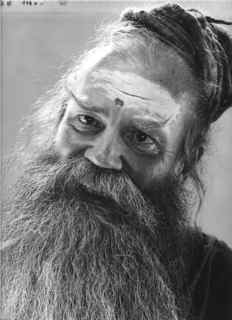
The “bindi” is also applied to bring awareness and attention to the third eye.  One of my favorite kirtan singers BhagavanDas says it best, “The bindi brings

Bhagavan Das

full awareness to the third eye.  People will look, you will see it when you look in the mirror, and this adds energy to your third eye.”  Just to be completely honest, people will stare… especially if you are male and wearing this symbol.  I personally feel most connected when I take a moment to apply it.  It’s a very personal act of connection with the divine, a deep connection to the third eye center.

There are a couple of important reasons to wear it, and I’ll also talk about application in case any of you reading might want to take the bindi for a test drive:

One of the reasons I like wearing it is not just the significance of the third eye energy, but that it helps me to connect deeper to my spiritual path.  When others stop and look, or even talk to me about the bindi it gives me a chance to share my journey with someone else.  We live in a world where life is moving quickly, and little things like this catch people off guard and it slows them

down, causes them to stop, and connect for a moment.  A bindi can be worn by both men and women.  It is a connection to the divine, and in some ways is an outward representation of that connection.  It focuses the energy into our intuitive center and helps us to focus.

The bindi is traditionally applied with sandalwood paste and kumkum powder. Sandalwood is important for many reasons.  It’s fragrance has calming properties, and when applied to the forehead allows us to smell it, feel it and embrace it.  We know that it is there, and the forehead is where we hold most of our worry, so it brings cooling to our “worry center”.   The kumkum is the red powder that is applied on top of the sandalwood paste.  You can easily find powders in different colors, and different methods of application.  I’ll detail my personal process, and feel free to apply it as you see fit.

Some people just apply the adoration as a fashion statement, and where there might be nothing wrong with this, there are deeper energies present in simple actions.  There are individuals that take yoga solely as a physical practice, but the spiritual aspect is inherent whether you want it or not.  So just keep that in mind when connecting to practices that may have a latent spiritual symbolism.

You can use as a tool to focus your meditation, you can use it to build your connection to your intuition, and it can outwardly help you connect to your spiritual path.

1)  I first take a moment to center myself and I call in my personal deity, guides and angels.

2) I apply a small amount of water to my left palm, and add a small amount of sandalwood powder then mix them with my left ring finger until a paste forms.

3) once the mixture has formed into a paste I take my right ring finger and apply it to the spot right above my nose, centered between the forehead.  I apply it by making small circles, and its usually no bigger than the size of a nickel.  While I apply it I usually say a mantra.  This mantra penetrates into the third eye during the application process.

4) Now to apply the kumkum powder.  What I have found best for getting the perfect little circle is to take the eraser end of a pencil, lightly tap the powder covering the eraser fully.  Then take the eraser and press firmly into the center of your sandalwood past circle.  I hold long enough for me to say the mantra one more time, then release.

Some people apply the bindi without the sandalwood, some use their finger when applying the kumkum, some use applicator kits, and there are many other ways of adorning oneself.  The most important part is finding what works for you, and finding your reason for applying it.

Have fun with it.  Even if you don’t find yourself drawn to using this spiritual tool, hopefully now you will have a deeper understanding of its meaning.  Namaste!

Mahayogi Das CFT CSN MAT PAT

http://www.michaelbrazell.com

michael@michaelbrazell.com

Tuesday Spiritual Fitness and Nutrition Tip 1/22/12

Here is  your Tuesday Spiritual Fitness and Nutrition Tip!

Fitness:  Affirmations are powerful in how we connect or disconnect from moving into fitness.  We have to take caution as to what we say less we create the experience or emotion.  If we were to say, “I have no time to workout, life is just too busy”- it becomes our reality.  If there is time to complain about there not being enough time, you just wasted time you could have been doing push ups, squats, or jumping jacks.  “I am too tired to workout”– in the time it took you to plop down on the bed, turn on the TV, and find the perfect show to watch you could have run a few times around the block.  We have to listen to what we are affirming.  Some of these affirmation are stored in the subconscious (I’ll be doing an entire blog on this in the next few days).  Some we speak daily.

Here are a few common negative fitness affirmations:

“I’ll never reach my goal weight”

“The gym frightens me”

“I’ll never have the perfect body”

“I’m too busy to workout”

“My life is too chaotic to spend time in the gym”

—What all of these are saying is simply this: “I do not have time to take care of the body that will allow me to be part of this wonderful physical experience.  My temple is in shambles, and will not take part in its restoration.  I willfully damage my connection to this divine vehicle.”

This is basically what you are saying by not committing to moving into greater states of health.  What will it take for you to show up to your life?

Here are some positive fitness affirmation to add into your day:

“I make time for my body, my health and my well being”

“I am committed to my health in all areas of my life”

“My body is the temple of my life, I am committed to its upkeep fully.”

“Each day is a new opportunity for me to connect to my body through fitness”

“Fitness comes easily to me”

“I am perfect, and all my imperfections add beauty to my experience”

—You get the hint, now right a few of your own.

Nutrition:  Simple, fresh and easy.  Nutrition needs to be simple.  This can be one of the most overwhelming areas when looking at making lifestyle changes.  Start with micro shifts into more sound nutrition choices.  Instead of eating fries or chips with your meal, have an apple.  Keep fruit, nuts, and veggies handy through your day if you are a chronic snacker.  Keep a food journal for a few days to see how many calories you are actually consuming.  Not eating enough calories can be just as bad as eating too many.  Many smart phones even have some useful apps that can help keep track of your daily intake.

Mahayogi Das CFT CSN MAT PAT

michael@michaelbrazell.com

http://www.michaelbrazell.com

http://www.deviantyogi.com

Pagan Blog Project: Bhatki Yoga- The Path of Devotion

Bhatki Yoga:  The Path of Devotion

Many of us in the west are familiar with Asana Yoga or the yoga of the body.  Asana connects us to the body’s flow, it brings in alignment, and it gives us a pretty decent workout.  Asana practice in and of itself is not yoga.  Yoga is divided into four main forms and Asana is one method of connecting to a particular yogic path.  Bhatki is one main form of yoga that has its full roots in the spiritual side of the yogic experience.

Bhatki is the path of devotion.  This is also known as the “yoga of the heart”.   Most of us that walk a spiritual path have in some way devoted ourselves to our journey, our cause, and/or our community.  I want to take a deeper look at Bhatki and how we can apply its deeper roots to our personal practice in order to deepen our connection to the divine.  Devotion does not necessarily mean throwing ourselves in front of an altar to any specific deity, devotion is an action of commitment to the divine through our actions.  Bhatki truly is the embodiment of seeing the divine in everything around us.  To see God or Goddess in everything:  In the air we breath, in the trees on our walk to work, in the homeless person asking for change, in the sky above and in the earth below–and to the divine reflection staring back at us in the mirror.

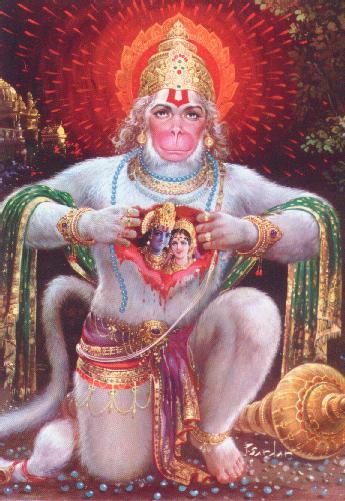
The path of devotion can take many forms, it is up to us to decide where we want to find that connection.  In Hinduism, Hanuman is the embodiment of Bhatki.  He was fully committed to Rama.  Hanuman completely devoted his energy to serving Rama which freed him from the binding nature of the physical.  To be single pointed in our focus on the divine, allowing ourselves to transcend the physical.

Each day we have an opportunity to deepen our connection to our divine self.  Here are a few things you can do to deepen your practice through Bhatki:

1)  Say a mantra (prayer) to your chosen path, deity, or energy.   Do this through your day.  Say a mantra that connects you directly to that divine energy.  Hanuman’s mantra is:  Sri Rama Jaya Rama Jaya Jaya Rama.  You can use anything that connects you.  It could be a line from Charge of the Star Goddess, or just simply a positive high vibration word like “love” or “peace”.  Doing mantra work through our day brings the divine into the randomness of our day.  We do not have to sit in front of our altars to bring in the divine energy.

2) See the divine in everything.  Connect through your heart.  Giving selflessly is one way to lead with your heart.  Volunteer at a homeless shelter.  Give to those that are in need.  Choose not to argue with those you love.  This allows us to BE the divine.  Take this further and connect to the world outside.  Touch a tree and see it as divine.  Pause and see the divinity in a single blade of grass poking its way through the concrete.  Go vegetarian for a day (or longer) to extend your compassion to

3) See perfection in all of your imperfections.  See yourself as the divine.  There is a story of Hanuman rushing off to get an antidote for Rama’s brother who was poisoned.  He gets to the sacred mountain and forgets which flower is the antidote–so he lifts the entire mountain and brings it back to Rama.  We aren’t perfect.  We sometimes forget about our connection and stop showing up.  We must show up, even if we forget the details, show up with a mountain of love on your shoulder for all of your parts.

The world is your altar, commit to your path, and devote yourself to this life fully.  Each breath is a mantra, each day another chance to be in that space of devotion.

Rock On Hanuman By MC Yogi

Tuesday Spiritual Nutrition and Fitness Tip 1/17/2012

Every Tuesday I’ll be bringing you a fitness and nutrition tip to help move you your week.  Subscribe, share and don’t miss out!

Nutrition:  Don’t tell yourself that you “can’t have something”.  We are programmed from a very young age that when someone puts a limitation on us we will rebel and do it anyway.  Someone saying “Don’t push that red button”, just makes us want to push it.  The same works with nutrition and diet.  When we tell ourselves that we will never have sweets, carbs, etc.  we only create a stronger desire for them.   This is affirmation work at its best.  Affirmations can work both ways, so we have to use a positive affirmation to eliminate the buried negative one.

Negative Affirmation:

“I will never have sugar again, its what is causing me to gain weight”

–This makes all sugar negative, and when we inevitably have something containing sugar, we hold onto more guilt.

“I allow myself to enjoy all aspects of eating.  I am in complete control of what fuels my body to be at its very best”

An affirmation like this one still gives me permission to have that cupcake, and without the guilt, and with more enjoyment.  Life is about enjoying what we have in front of us.  Allow yourself to engage in treats, but give yourself permission to be in control.  If you get a cupcake, eat 1/2 and give the other to a friend, or save it for another day.

Our relationship to food is 90% psychological, learning to balance this relationship will help you moving forward, and will be the focus of future blog posts.

Fitness:  “I don’t have time to workout”.  Well, I don’t have time to listen to limitations.  There is always time.  We find time to watch TV, we find time to go to Starbucks, we find time to complain about not working out.  All you need to do is consciously connect to your day and find spots to add in a little fitness.  Take the stairs instead of the escalator, if you are going to Starbucks pick one that is further away (and if it means you’ll be late getting back to work, more reason to move faster–adding in cardio).  See how easy it is to simply add in a few moments here and there.

Here is a personal example:  So we are stuck at my shop doing in inventory this week.  I’ve been off my personal routine, but I am not going to let that stop me.  Every hour my phone buzzes, I take a break, go into the back and do 25-30 push ups.  In 8 hours I’ve done over 200 hundred push ups, an each time it only takes me 30 seconds.

There is NO EXCUSE not to add some fitness into your day.  Connecting to the body is one step in connecting to the soul.  So, stop complaining and start doing!

Mahayogi Das CFT CSN MAT PAT

http://www.michaelbrazell.com

michael@michaelbrazell.com
Taking Inventory of Our Lessons

Taking Inventory of Our Lessons

So, as we move into our store inventory I try to find some way to connect this into my spiritual world. There is a monotony and inventory is not fun by any means. To make these non-fun things a little more life bearable I try to connect some spiritual meaning to them. I try to find joy in the mundane, and in everything there is application to the spiritual on some level.  One of the biggest questions I get asked in my practice as an intuitive consultant is: “How do I let things go?”. The answer is simple: You cant. We are human, and we all have the need to hold on to everything in our lives. We become attached to memories–both good and bad, but more often the bad ones hold the highest energy. We tend to hold onto negative experiences in the hopes that we will never have to go through them again. Well, law of attraction says “THat which I focus on, I will constantly call into my experience.”  When we attach ourselves to anchors we will only drown. They keep us locked in negative and dangerous patterns. Many of us repeat negative relationships, find ourselves in similar unhappy work situations, or even stuck in negative habits. So, if we can’t let things  go–how do we move forward? We must transition the energy to something that is positive.  In ever experience, we learn something about ourselves. If we are unconscious to what we are learning, it means that we didn’t quite get the lesson. We understand the experience, but not the lesson. We have to go deeper. We have to extend gratitude into every life situation. Take a moment and let your mind drift back to a past experience that you might not want to repeat. There was something about that experience that you overcame, or learned to do for yourself. When you acknowledge the lesson you are more able to move forward from that point in time. You begin to see where your growth has been initiated.   Some of us are what I like to call “experiential learners”. What this means is that in order to fully engage life we have to “experience everything”. To understand joy, we really must go into our sorrow, to feel connection we must have periods of disconnection, to feel spiritual we have to first be angry at the divine. The previous are just a few things that I have noticed about my own experience, and how you go through your lessons might be different. The danger is that sometimes we continue to hold onto those negative vibrations because we feel we must have the balance, or we get comfortable with those low swings. We have to learn to live in the highest vibrations. When we hold on to only the negative we create a pattern. An example is the people who think that something bad is on the way because life is suddenly going great–of course it will, that is your affirmation! We must break ourselves out of these patterns of upswing and low swing. This isn’t to say that life wont have its sticky moments, but you will see that they last for shorter durations and that you are able to move through them with greater ease.

Here is a small process to take inventory of your lessons:

1) Get a notebook and at the top of the page write down a past experience that you want to focus on.
2) Write a small description of the experience. What you felt while you were in that space, how long you were in the experience, and who you feel the lesson bringer was. If this was a relationship it could be the person you shared the relationship with, it was a work situation it could be a boss, or a coworker that caused some struggle.
3) Start a list identifying what you learned about yourself in that place of difficulty. Did you learn that you anger easily. Did you learn that you had inner strength that was realized after you decided to leave an abusive partner, etc.
4) How do those lessons apply in your life now. Are you repeating old patterns? Are you a different person now due to those past experiences?

When we ae able to take account of all parts of self we begin a deeper process of
integration. We pull back any power we have given away to people, situations and circumstances. This is a new and exciting year. It is time to release all the anchors and move freely into what is coming. We are all who we are because of what we have gone through, what we do with those experiences will either propel us forward or bind us. It’s time for you to set sail.

Mahayogi Das CFT CSN MAT PAT
http://www.michaelbrazell.com
http://www.deviantyogi.com
michael@michaelbrazell.com